
Personal Alarms for Couples: Can You Share a Home System?
Personal alarms for couples can give two people a way to request help while sharing a compatible home alarm base unit. Each person needs a suitable wearable button, and the system needs to be set up around both users.

What is shared, and what does each person wear?
A home alarm has a base unit that communicates with monitoring and a wearable button that sends an activation to it. A second compatible button can give the other person their own way to raise an alert. Sharing a base unit should not mean passing one pendant between two people.
Think about the times when one person is asleep, in the shower or in another room. The benefit of separate buttons is that each person can keep their own button within reach. For details of the equipment, see the additional personal alarm button page.
Personal alarms for couples: wrist or neck options
The standard TASK Connect home button can be worn on the wrist or around the neck using the supplied accessories. One person may prefer a wristband while the other prefers a pendant. Ask each person to try the position, find the button and practise pressing it.
Choose the arrangement together. If a strap is difficult to fasten or the button is uncomfortable, mention that before ordering. A shared household does not mean both people have the same dexterity, eyesight or preferences.
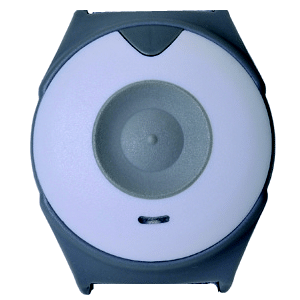
5 checks when choosing personal alarms for couples
| Question | Why it matters |
|---|---|
| Is there a button for each person? | Both users need a straightforward way to request help. |
| What information is recorded for each wearer? | Ask how the provider identifies activations and records relevant contacts. |
| Where will the alarm be used? | Test the rooms and garden areas used by both people. |
| Does either person need automatic detection? | A standard manual button does not automatically detect a fall. |
| What is the complete price? | Confirm the additional equipment and any monitoring or setup charges. |
Home alarms and portable GPS alarms: what is the difference?
A mobile-network home alarm with SIM card (a GSM alarm) and a portable GPS alarm do different jobs. The mobile network carries an alarm call. GPS provides location information. Having a SIM card does not, by itself, mean an alarm can locate the wearer.
Home telecare alarm: help around the home and garden
With a mobile-network home alarm with SIM card (a GSM alarm), the base unit uses a SIM card to contact our monitoring centre, much as a mobile phone uses the mobile network to make a call. No broadband or landline is needed.
The wearable button sends its alert to that base unit. Neither the home button nor the GSM base unit sends the wearer's GPS location. Our team holds the home's address on the account, but this is not live tracking. Each button must stay within wireless range of the base unit, including any garden areas where coverage has been tested. Taking the button to the shops does not give you protection there.
The digital home alarm works through the home's broadband instead. It has the same home-and-garden role: its wearable button also needs to stay within range of its base unit.
Portable GPS alarm: help when you are out and about
A portable device such as the Go Watch GPS alarm goes with the wearer. It uses the mobile network to send an SOS and GPS to obtain location information that can be sent to our monitoring team. This can help us identify where assistance is needed away from home. It does not need to remain near a home base unit. Operation depends on mobile coverage, available location information and keeping the device charged.
For a couple: two compatible buttons can share a home base unit while both people are within its wireless range. If one partner walks to the shops or goes further from home, that person should consider a portable GPS alarm for support on those trips. Choose around where each person needs help, rather than assuming the shared home buttons also work out and about.
What if one person needs a fall detector?
Ask about a compatible Vibby fall detector if automatic alerts would be useful for one wearer. Confirm the combination with TASK Connect rather than assuming a detector bought separately will be ready to use.
Automatic detection cannot recognise every fall. The wearer should press their manual button when they need help and can do so. It is worth discussing both people’s needs separately, even when the base unit is shared.
Can we add another pendant, a Vibby or other sensors?
A standard TASK Connect home telecare system can be expanded with compatible items from our Accessories & Sensors range. This can include an extra pendant button for another person in the same household, a compatible Vibby fall detector, or other supported sensors. The available options depend on your system and the combination of equipment you need.
Please tell us what you intend to purchase before placing your order. We can check that the items work with your system and arrange the correct programming before posting them to you. If you already have a TASK Connect alarm, have your customer number and system details ready when you contact us. If you are ordering a new system, tell us which extra items you want so we can prepare them together.
Browse Accessories & Sensors or contact us to check your setup.
How much do personal alarms for couples cost?
Compare the whole household arrangement. Ask what is included in the main package, the charge for the extra button and whether anything else changes when a second person uses the service. Do not assume that every provider’s “couples” package has identical terms.
Our personal alarm costs guide explains how to compare setup and ongoing payments. If you already have a TASK Connect system, contact us with your customer number before ordering an extra button so we can check compatibility and programming.
Before you order
- Agree where each person needs to use the alarm.
- Choose a comfortable wearing style for each user.
- Confirm how both users’ information and contacts will be recorded.
- Arrange a test of each button after setup.
- Get the complete equipment and subscription price.
For independent background on choosing equipment and planning access to the home, read the NHS guide to personal alarms, telecare and key safes.