
Smartwatch vs Monitored Personal Alarm: Which Suits You?
This smartwatch vs monitored personal alarm guide compares two ways to request help, but their response arrangements can be different. Start by asking what should happen when the wearer presses SOS or a fall alert is triggered.
What can an Apple Watch do in an emergency?
On supported Apple Watch models, Fall Detection can recognise a hard fall, display an alert and, in specified circumstances, contact emergency services automatically. Apple explains the activation process and limitations in its official Fall Detection guidance. It also states that the watch cannot detect every fall.
Features depend on the model, settings and available connection. Check Apple’s current instructions for your watch and phone combination, including any supported satellite features. Avoid assuming that all smartwatches have the same emergency functions or that every model works independently of a phone.
What is different about a monitored GPS alarm?
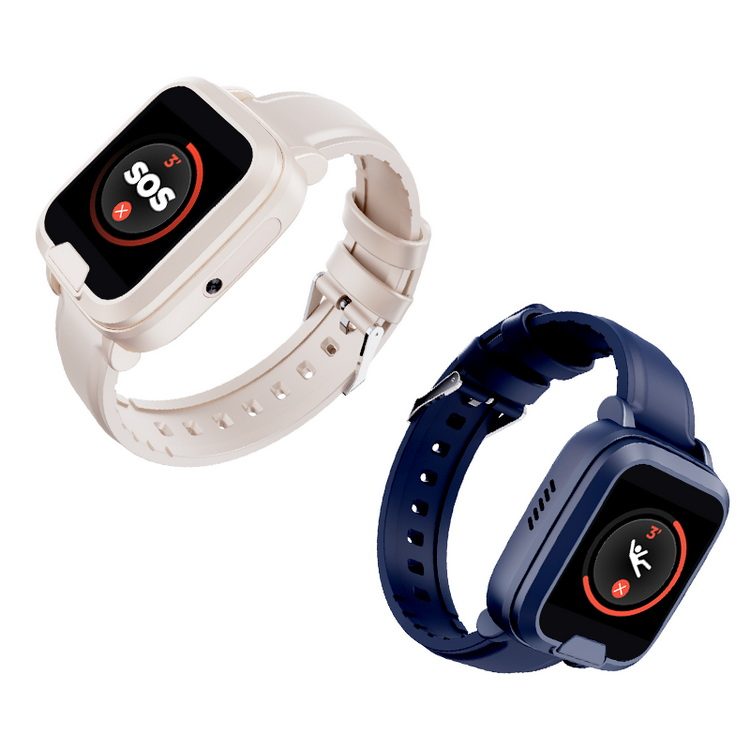
A Go Watch personal alarm is supplied as part of TASK Connect’s monitored service. Its SOS connects to monitoring operators, with two-way speech through the watch. The team can assess the activation and arrange appropriate assistance using the account information and response arrangements.
That is a service difference, rather than a claim that one watch detects more falls or has universally better technology. A person who already uses a smartwatch confidently may value its wider features. Another person may prefer equipment focused on a monitored SOS.
Smartwatch vs monitored personal alarm: 5 key differences
| Question | Everyday smartwatch | TASK Connect Go Watch |
|---|---|---|
| Who receives an SOS? | Check the model’s emergency-calling and contact features. | TASK Connect’s 24-hour monitoring service. |
| What connection is needed? | Requirements vary by model, phone pairing, settings and network. | An included multi-network SIM provides the mobile connection where coverage is available. |
| Is fall detection included? | Check support and activation settings for the exact model. | Optional impact fall detection can be configured. |
| How is it maintained? | Check charging, updates and account setup. | Regular charging and the supplied care instructions are required. |
| What should you compare financially? | Device cost and any relevant connection or service charges. | Setup and ongoing monitoring charges. |
Think about ordinary requests for assistance
The wearer may need help for reasons other than a recognised fall. They might feel unwell or need assistance for another reason. Ask how they would deliberately raise an alert and who would receive it.
Check what is handled by the watch’s built-in functions and what is provided by an additional app or subscription. An emergency feature on a smartwatch is not automatically membership of a professional personal alarm monitoring service.
Charging and setup need to fit the wearer
Compare how easy it is to find SOS, fasten the strap and place the watch on its charger. Ask who can help with settings and changes if the user does not manage those independently.
Go Watch’s published typical battery life is around one to two days, depending on use and conditions. Other watches have their own specifications. Do not choose a charging routine based on a different model’s battery claim. Consider the periods when any watch is off the wrist.
Do you need a watch at all?
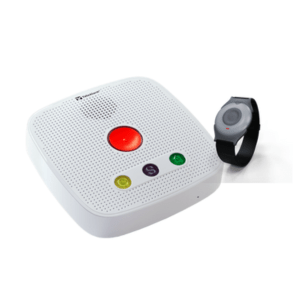
If support is mainly needed at home, a home personal alarm with a long-life wearable button may suit the routine. It works within range of its base unit and has different maintenance needs from a portable watch.
Our watch versus pendant guide compares those wearing formats. In the smartwatch vs monitored personal alarm comparison, the service behind the device matters as much as the wearing format.
Choose by fit, not by a blanket “safer” claim
Write down where the watch will be used, who should receive an alert, whether the wearer can manage charging and what help is available with setup. Confirm fall-detection limitations, water-use instructions and total costs for the exact option.
No device guarantees detection, connection or emergency-service attendance in every situation. The strongest choice is one whose features and support arrangements are understood by the wearer and the people helping them.